Good Morning Midnight

Good Morning Midnight

Play now

Lyrics

I’m coming
I choose day,
(Day, day, day)
I’m coming
I choose day
I’m coming home


He turned away
I choose day
(Day, day, day)

Good Morning–Midnight—
I'm coming Home—
Day–got tired of Me—
(S’ha cansat, s’ha cansat)
How could I—of Him?
(S’ha cansat)
How could I—of Him?

Sunshine was a sweet place—
I liked to stay—
But Morn–did'nt want me—now—
(que no, que no)
So–Goodnight–Day!
(vale adéu, vale adéu)

Que no que no
Vale adéu adéu
Que no que no
Vale adéu
Vale adéu adéu
Que no que no
Vale adéu
Vale adéu adéu
Emily, Emily, Emily


I can look–can’t I–
When the East is this Red?
(Red, red, red)
Hills—have a way–then —
That puts the Heart—abroad—
(You–are not so fair)
Are not so fair–Midnight–
(no és just, no és just)
I chose–Day—
(No és, no és)
I chose–Day—
(Just)

But—please take a little Girl–
(Com t’ho diria?)
He turned away!
He turned away!


He turned away!

Take a little girl!

Ohh
I chose day
(Com t’ho diria?)
He turned away

Ohh
I chose day
(Day, day, day)
He turned away!

I chose day
I chose day
(Day, Emily, day)

He turned away!
Original poem

Good Morning — Midnight —
I'm coming Home —
Day — got tired of Me —
How could I — of Him?

Sunshine was a sweet place —
I liked to stay —
But Morn — didn't want me — now —
So — Goodnight — Day!

I can look — can't I —
When the East is Red?
The Hills — have a way — then —
That puts the Heart — abroad —

You — are not so fair — Midnight —
I chose — Day —
But — please take a little Girl —
He turned away!

Annotated adaptation of the poem catalogued as F‑425, written around 1862‑1863. 
Emily did not give titles to her poems.


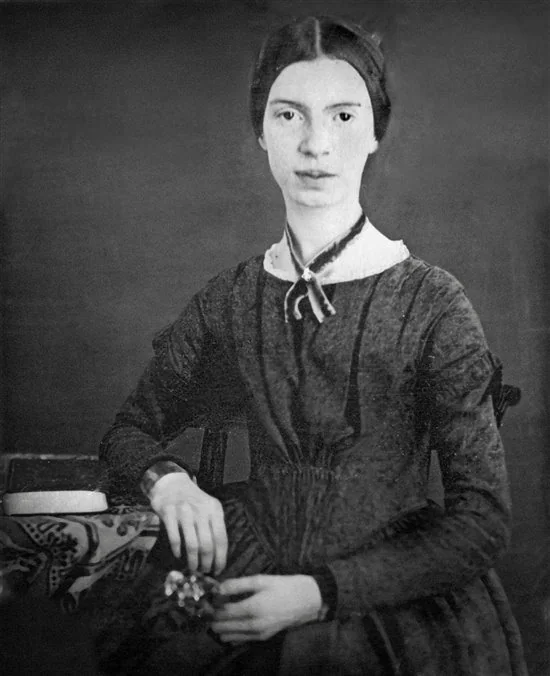
EMILY DICKINSON


Portrait of Emily Dickinson

(10 December 1830 – 15 May 1886)
Amherst, Massachusetts (USA) 


Although she is the most famous, most studied, and most influential poet of all time, she published only a handful of poems during her lifetime and, once retouched by editors, they passed almost unnoticed. She wrote more than 1,800, breaking with every convention of the nineteenth century and beyond through a radically personal voice. From her twenties onward, she lived dressed in white and secluded in her home, receiving visits only from her sister-in-law and lover.